
Not every oil-contaminated tank has a stable liquid level or a thin, uniform oil film. Some industrial applications involve changing water levels, larger surface areas or substantial quantities of floating oil. In these conditions, Floating Weir Oil Skimmers may offer a practical approach because the collection point follows the liquid surface.
A weir skimmer operates by allowing the surface layer to flow over an adjustable or floating edge into a collection arrangement. Since oil is concentrated near the surface, the system can collect this layer for separation or transfer.
The key difference from many fixed-position skimmers is its relationship with the water level. A floating design moves with the surface, which can make it useful where tank levels rise and fall during normal operations.
This can be relevant in wastewater tanks, process-water systems, pits and other industrial applications where the liquid level is not constant.
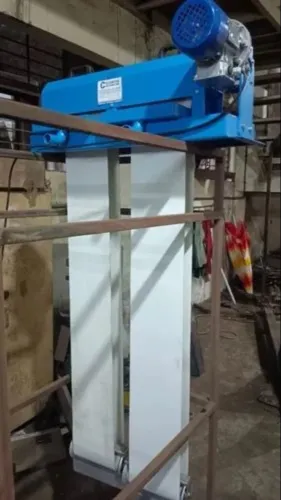
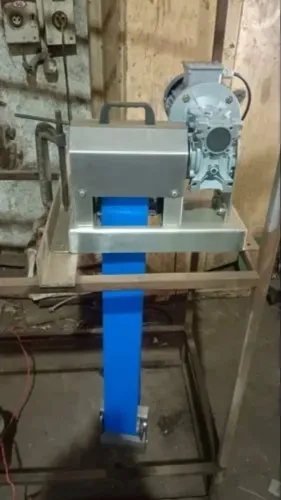
Compared with a belt skimmer, a floating weir system does not rely on oil adhering to a moving belt. Instead, it physically draws in the surface layer. This makes the two technologies suitable for different conditions.
A belt system may be attractive when:
Space is limited
Oil contamination is relatively consistent
The tank has a convenient mounting position
Selective oil pickup is important
A floating weir may deserve consideration when:
Liquid levels fluctuate considerably
Oil collects over a broad surface
Larger quantities of floating material must be recovered
Surface-layer collection is practical
The tank configuration supports floating equipment
There is an important trade-off. Because a weir collects the surface layer, it can recover some water or process liquid along with the oil. Correct adjustment and downstream separation therefore become important.
Industrial teams should examine the total recovery process rather than focusing only on the skimmer. Questions worth asking include where the collected mixture will go, whether secondary separation is required and how recovered oil will be handled.
In Pune and Maharashtra's wider industrial corridor, applications may range from engineering wastewater pits to process tanks and centralized fluid-management systems. The right solution depends on actual contamination patterns.
Tank conditions should be observed over a normal production cycle before equipment selection. A tank that appears stable during an inspection may fluctuate substantially during shift changes, cleaning cycles or discharge operations.
Debris is another consideration. Floating solids can obstruct a weir or enter the recovery stream. Where leaves, chips, plastic fragments, sludge or other solids are present, additional screening or maintenance planning may be necessary.
Cleanosk Automation can be considered within Pune's industrial oil-separation equipment segment when facilities are evaluating different skimming technologies for their process conditions. The important step is defining the application before choosing the mechanism.
Floating weir systems are not automatically better than belt skimmers, and belt systems are not universally more efficient. Each works on a different collection principle. Plants that understand liquid-level behavior, contamination volume, tank access, oil properties and downstream handling requirements are better positioned to choose a skimming method that fits their operation.