

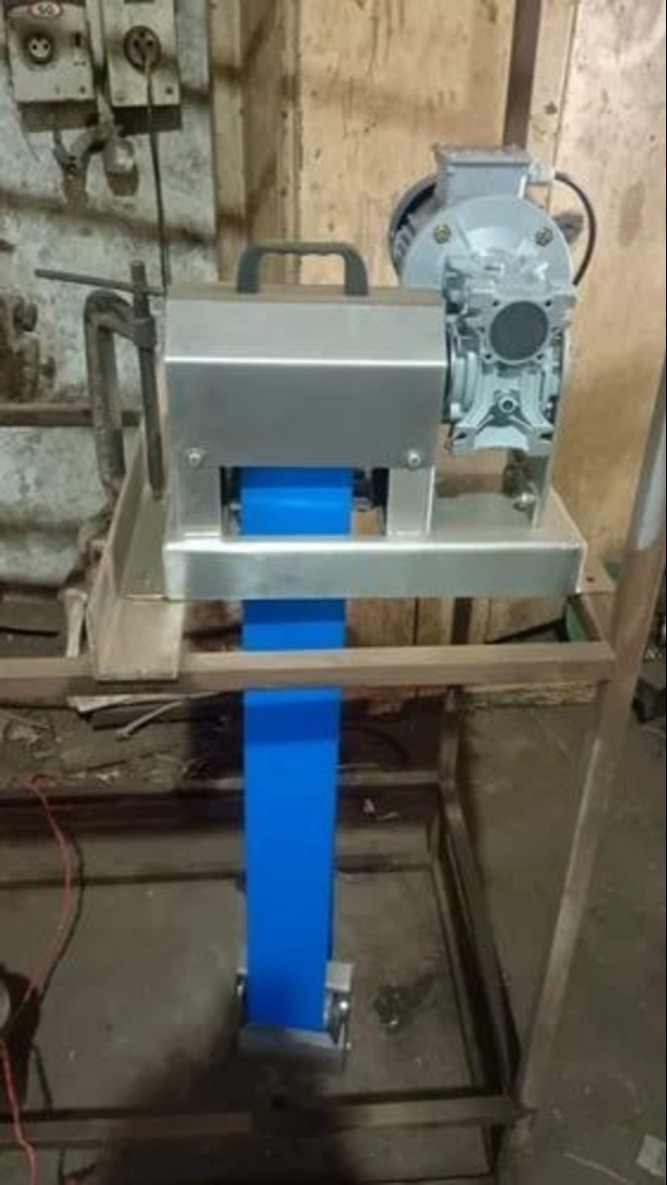
Grease floating on process water can create handling and maintenance problems if it is allowed to accumulate. Depending on the industrial process, grease may enter tanks through component washing, equipment cleaning, lubrication, food processing, maintenance activities, or wastewater collection. A Grease Skimmer is designed to remove this floating material before it creates larger operational difficulties.
The basic principle is straightforward. Grease and certain oily contaminants generally separate from water when conditions allow them to rise to the surface. A skimming system collects this floating layer so that the underlying liquid can remain available for further treatment, recirculation, or disposal according to the plant's process.
Industrial grease skimming should not be viewed as a one-size-fits-all operation. Grease can behave differently depending on temperature, viscosity, suspended solids, chemicals, and the characteristics of the process liquid.
This means the first step is understanding the contamination.
Plant teams should assess:
Type and consistency of grease
Operating temperature
Tank size and geometry
Liquid-level fluctuations
Amount of floating contamination
Presence of suspended solids
Required skimming frequency
Available installation space
Temperature can be particularly important. Some grease becomes more fluid at higher temperatures and considerably thicker as conditions cool. Equipment that performs effectively with relatively fluid contamination may behave differently when the recovered material becomes highly viscous.
For factories in Pune, Pimpri-Chinchwad, Chakan, Bhosari, Talegaon and surrounding Maharashtra industrial belts, grease and oil separation may be relevant in engineering, automotive, fabrication, component manufacturing and various processing operations. The skimming requirement should therefore be assessed against the actual production environment.
A grease skimmer can also support housekeeping around tanks and treatment areas. Heavy surface accumulation can make tanks harder to inspect and maintain. Regular removal prevents large quantities of floating grease from remaining unattended for extended periods.
However, skimming alone does not solve every wastewater problem. Emulsified oils and greases behave differently from free-floating contamination. When oil is chemically or mechanically emulsified into water, additional treatment methods may be required. A skimmer is generally most useful where contaminants can physically separate and collect at the liquid surface.
The collection arrangement also deserves attention. Removing grease from the tank is only one part of the process. Facilities need an appropriate container or recovery arrangement for the collected material and a maintenance routine for cleaning components that come into contact with thick contamination.
When evaluating equipment, maintenance teams should examine whether the skimming mechanism can be accessed easily and whether wear components can be inspected without disrupting surrounding machinery.
Cleanosk Automation operates in Pune's industrial equipment environment, where skimming solutions may be integrated with fluid handling and cleaning processes according to plant requirements. Proper application assessment is more important than simply choosing equipment based on nominal specifications.
A well-selected grease skimming arrangement can make contamination easier to manage at its source. By understanding grease characteristics, tank conditions and process requirements first, industrial facilities can determine where skimming fits within their broader fluid management and wastewater handling practices.


