
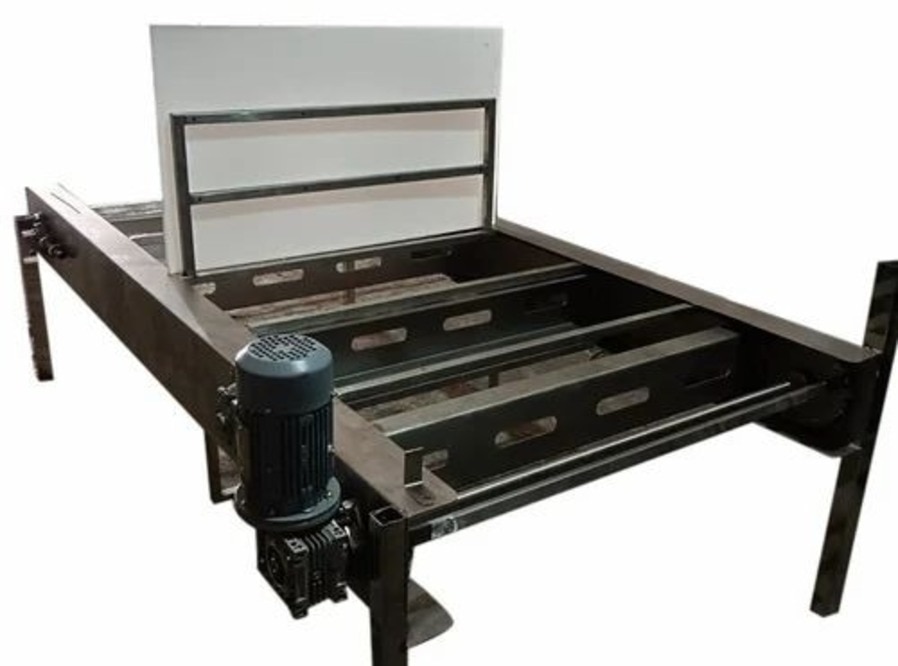
A horizontal scraper skimmer only performs well when its blade travel, tank geometry, liquid level, and discharge arrangement match the oil and wastewater being handled. Use the operating checks, specification list, and quotation comparison method below to identify a suitable machine and request a price that includes the equipment you actually need.
Key takeaways
- Set scraper flights below the oil layer without disturbing settled solids.
- Specify tank width, depth, flow, oil thickness, solids, and discharge method.
- Demand materials, drive details, capacity, warranty, and commissioning tests in the quote.
- Verify performance by measuring oil capture, water carryover, and outlet flow.
How a horizontal scraper skimmer collects and discharges oil
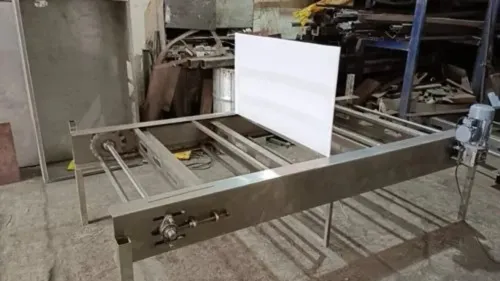
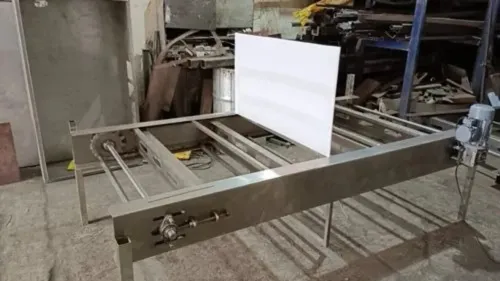
Mount the horizontal scraper at the tank surface, with its flights or blades spanning the working width and its chain, belt, or shaft drive running along the tank length. Set the scraper just deep enough to catch the floating oil layer without dragging settled solids.
Confirm the mechanism in the quotation: a scraper, belt, disc, and rope-mop skimmer operate differently.
The collection cycle runs as follows:
- Install the support frame, drive assembly, scraper flights, collection trough, and adjustable tank interfaces.
- Set the scraper height for the normal liquid level, allowing for level variation without lifting the blades clear of the surface.
- Start the drive at its specified speed. The flights travel across the surface and push floating oil, scum, and other buoyant material toward the trough.
- Let the collected liquid drain by gravity into an oil-receiving container, or use a transfer pump where the container sits below or away from the tank.
- Stop the drive before removing accumulated solids, then clean the flights and trough and restart after checking alignment and free movement.
The discharge is usually an oil-water mixture, not neat recoverable oil. Ask for the expected oil-to-water ratio, drain-back arrangement, container capacity, and disposal responsibility. A horizontal scrapper oil skimmer manufacturer for quote in pune should show these connections, the tank-interface dimensions, motor and gearbox scope, and control requirements rather than quoting only the scraper assembly.
Where the skimmer fits in an ETP and what it can remove
A horizontal scraper skimmer suits an ETP when oil has collected as a distinct layer on the liquid surface. Install it in an oil-collection chamber, equalization tank, API-type separator, or pretreatment tank where a moving flight or blade can reach the surface and push oil into a trough.
Choose a horizontal scrapper oil skimmer for ETP when these conditions exist:
- Free oil or grease floats instead of remaining dispersed in the water.
- The tank provides a reasonably calm surface and enough length, width, liquid-depth range, and mounting space.
- Inlet turbulence does not immediately break the oil layer back into droplets.
- Solids or scum will not jam the scraper; provide upstream screening or a solids-removal step if they are present.
The skimmer removes free-floating oil, grease, light scum, and similar surface material. It reduces visible oil and the oil load reaching downstream treatment, but it does not by itself guarantee consent-limit compliance.
Separate free oil from emulsified oil before selecting the equipment. Free oil forms a visible layer or droplets that rise and collect after a quiescent settling period. Emulsified oil produces a persistent cloudy dispersion that does not separate through settling; detergents, high shear, or unsuitable pH often cause it.
Confirm the difference with a jar test and laboratory oil-and-grease results. Stable emulsions or dissolved hydrocarbons require chemical breaking, coalescence, DAF, or another treatment stage before surface skimming.
Which tank and process details determine the correct size
Do not send only the tank capacity. Provide the tank length and width, usable liquid depth, normal operating level, minimum and maximum level, inlet and outlet locations, and the available mounting space. A scraper sized from volume alone can miss the oil layer or push excessive water into the collection trough.
State these process conditions with the quotation request:
- Oil-loading rate in litres per hour or kilograms per hour, expected oil-layer thickness, oil type, viscosity, density, and operating temperature.
- Average and peak flow, inlet velocity, surface turbulence, and whether a baffle or stilling zone calms the inlet before the skimming area.
- Suspended solids, fibrous material, grit, scum, and any tendency to form sticky deposits.
- Required duty: continuous or intermittent operation, operating hours per day, and the target free-oil concentration after skimming.
- Whether the duty concerns free-floating oil and grease or total-oil reduction; stable emulsions and dissolved hydrocarbons need another treatment stage.
| Input | Why it changes selection | What to provide |
|---|---|---|
| Tank interface | Determines scraper travel and support arrangement | GA drawing, length, width, level range, access clearances |
| Liquid level | A fixed scraper position can leave oil behind or collect water | Normal, minimum, and maximum operating levels |
| Oil properties | Changes conveying load and discharge behaviour | Viscosity, temperature, layer thickness, solids |
| Discharge arrangement | Sets trough and downstream equipment requirements | Oil-receiving tank, pump, piping, elevation |
| Utilities | Determines installation feasibility | Power supply, control voltage, compressed air if required |
Ask for the supplier’s GA drawing, wetted-material schedule, utility load, spare-parts list, maintenance intervals, warranty, and local service response time.
What a Pune quotation must include before you compare prices
A Pune quote is comparable only when it defines the complete supplied system, not just a skimmer assembly. Ask every horizontal scrapper type oil skimmer supplier in Pune for the same duty, dimensions, materials, utilities, and commercial scope.
Request these technical documents and figures:
- GA drawing showing tank-interface dimensions, scraper travel, collection trough, discharge point, and maintenance clearances
- Rated tank length and width, liquid depth, flow rate, oil-layer duty, and allowable surface turbulence
- Wetted materials, scraper or flight construction, drive rating, gearbox details, and corrosion allowance
- Supply voltage and frequency, cable-entry method, control philosophy, and hazardous-area classification where flammable vapours exist
- Spare-parts list, recommended preventive-maintenance intervals, warranty period, and local service response time
Separate the price line by line before judging the horizontal scrapper oil skimmer price in Pune.
| Item | Check whether included | Why it changes comparison |
|---|---|---|
| Skimmer assembly | Frame, scraper, trough, drive | Base equipment may exclude the motor or gearbox |
| Controls | Panel, starter or VFD, level sensors | Confirm whether your controls contractor supplies them |
| Recovery system | Oil tank, pump, piping | Discharge may otherwise stop at the trough |
| Site work | Support structure, installation, commissioning, civil modifications | Tank alterations can exceed equipment cost |
| Commercials | Freight, GST, warranty, training, delivery | Exclusions create an artificially low quote |
State indoor or outdoor installation, ambient conditions, access for lifting, and available utilities. Cleanosk Automation can be asked to confirm these interfaces in the GA drawing before you compare offers. Also specify whether the duty is free-floating oil removal or total-oil reduction; a scraper will not replace emulsion treatment or downstream compliance controls.
Related product
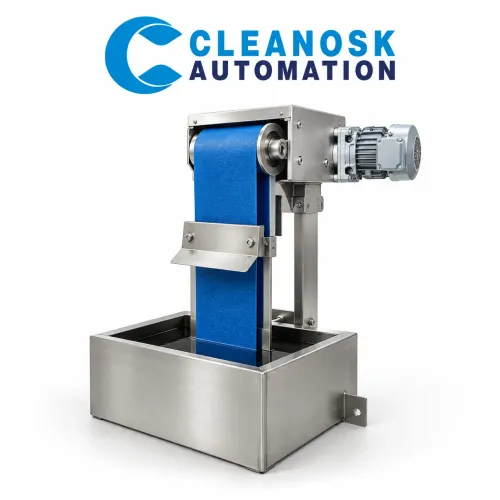
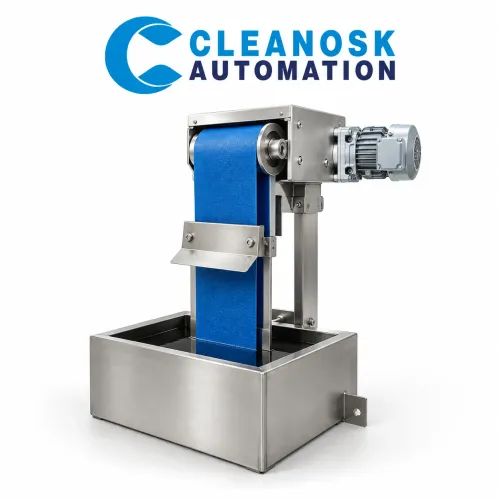
 | Oil Skimmers Horizontal Scrapper Type Oil Skimmer Cleanosk Automation is a leading manufacturer, supplier, and exporter of Horizontal Scraper Type Oil Skimmers in India. View product → |
How to verify performance after installation
Verify useful performance with a controlled run using the actual effluent, or a representative batch—not a litres-per-hour claim alone. Record oil removal and operating stability together.
1. Clean the tank surface, then confirm the scraper, collection trough, drain-back line, collection container, guards, and level controls are correctly installed. Note the liquid level, temperature, flow, and inlet turbulence.
2. Sample the feed before starting and run the skimmer under normal conditions for a defined period. Record oil loading, run time, recovered liquid volume, motor current, scraper speed, visible residual surface oil, water carryover, and every jam or stoppage.
3. Sample the recovered liquid and determine its oil-to-water ratio. Measure the oil fraction rather than treating the entire container volume as recovered oil. Confirm the container capacity, overflow protection, drain-back route, and waste-disposal responsibility.
4. Compare feed and post-run surface samples against the agreed residual-oil limit. Accept the installation only when it reaches that limit without unstable operation, then repeat the test after production flow or liquid-level changes.
5. Prevent repeat failures by inspecting the scraper and trough each shift, removing chips and fines from the screen, and cleaning surfactant sludge before it increases drag. Trend motor current; a rising reading indicates buildup, misalignment, or impending jamming before the drive trips.
Frequently asked questions
How does a horizontal scraper oil skimmer collect and discharge oil?
Flights or blades travel across the tank surface, push the floating oil layer toward a collection point, and discharge it through a trough, weir, or outlet.
Where does a horizontal scraper skimmer fit in an ETP?
Install it where oil and grease float, such as an oil-separation or equalisation tank, before downstream biological or filtration stages. It removes floating oil, grease, and some buoyant solids, but not dissolved hydrocarbons.
Which details determine the correct horizontal scraper skimmer size?
Provide working tank width and length, liquid depth, flow rate, oil-layer thickness, temperature, pH, solids load, tank construction, operating hours, and the required discharge arrangement.
What should a Pune horizontal scraper oil skimmer quotation include?
Request the rated width and capacity, scraper material, drive motor and gearbox, speed control, tank supports, oil collection outlet, electrical scope, installation work, warranty, delivery schedule, and commissioning tests.
How do you verify performance after installation?
Check that the scraper captures the surface oil without dragging settled solids, then record oil recovery, water carryover, operating speed, noise, vibration, and discharge flow under normal plant conditions.